
Mechanical Laboratory Instruments
A mechanical department's budget usually spans several labs, each with its own bench rigs and service units. Civil Mechanical India is among the Mechanical Laboratory Instruments manufacturers in India with a single catalogue from hydrostatics to pilot plants, and one of the suppliers in India that groups them by lab so purchase committees can compare line by line.
The catalogue is organised into sub-ranges. Fluid mechanics covers hydrostatics, Bernoulli, Reynolds, orifice and weir flow, pipe losses, pumps, turbines and fans, with teaching flumes and a computer controlled wind tunnel. Heat transfer includes conduction, convection, radiation and heat exchanger units. Chemical engineering has distillation, extraction, reaction and membrane pilot plants, while biochemical engineering adds fermenters and enzyme reactors.
Technical educational equipment includes dynamics rigs such as the centrifugal governor, gyroscope, static and dynamic balancing apparatus, truss force models and Coriolis force demonstrators. Hydraulics and hydrology, irrigation and laboratory glassware complete the range. Many rigs run from a common service unit, so buyers can add experiments without repeating the pump and tank.
Last updated: November 2026
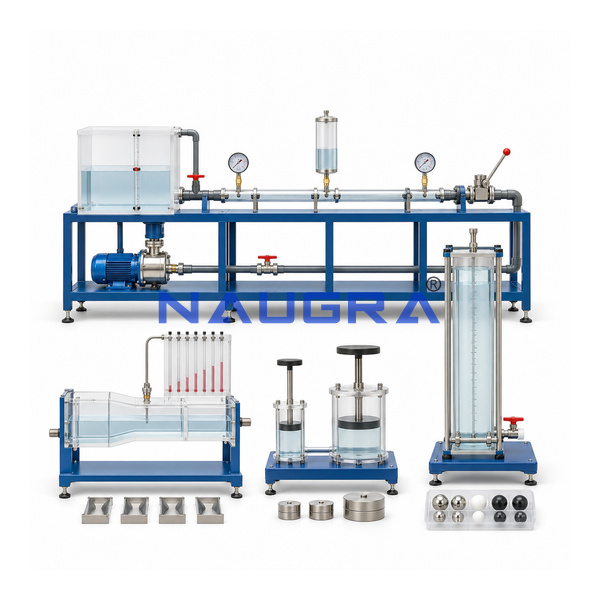
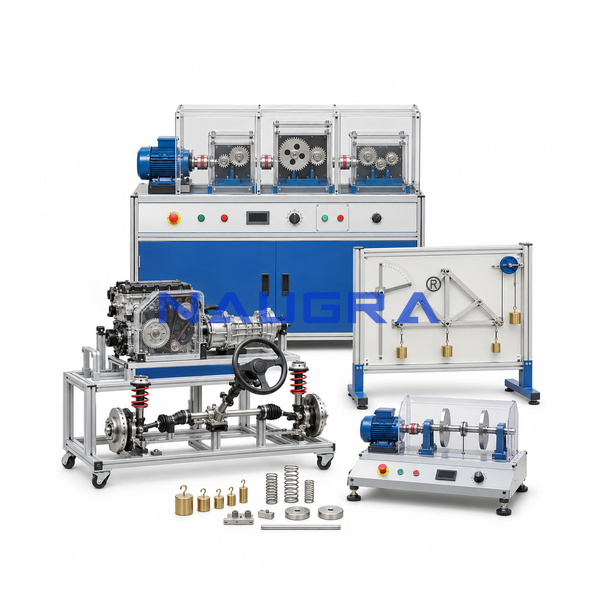
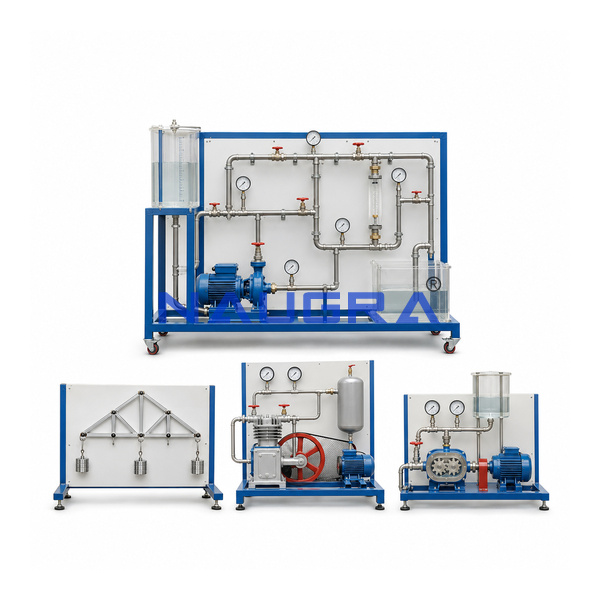
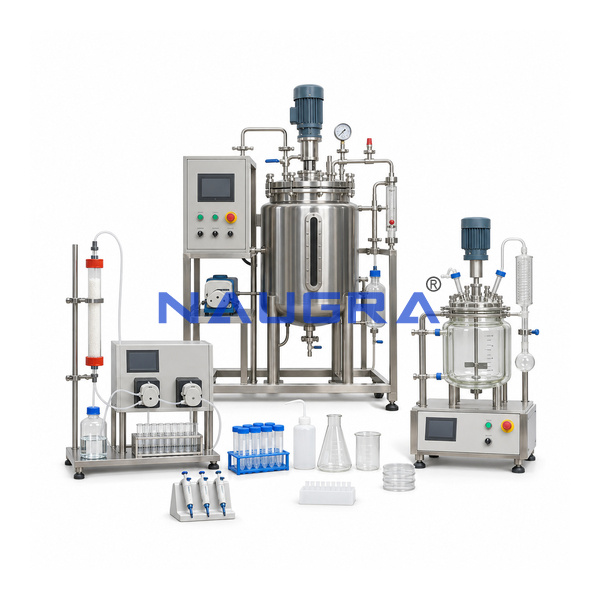
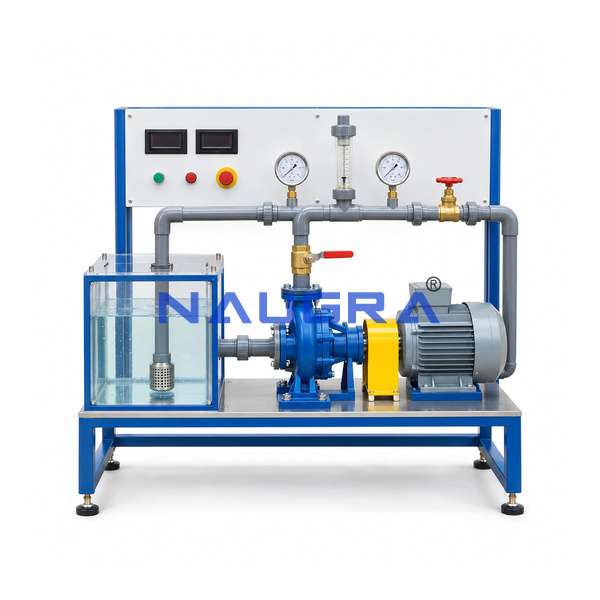
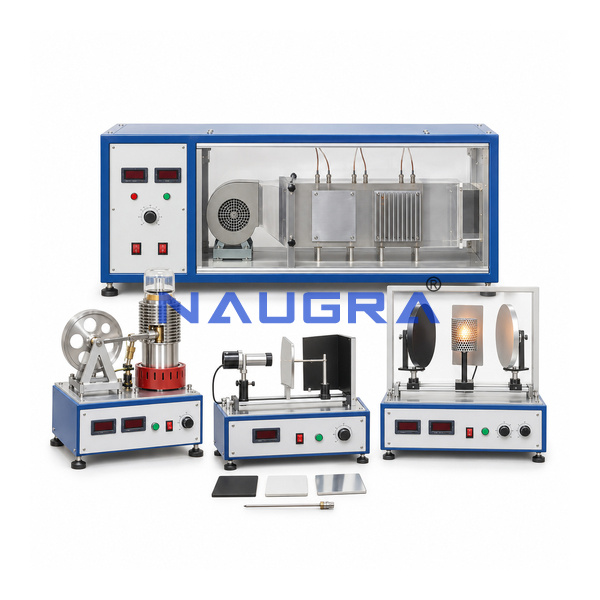
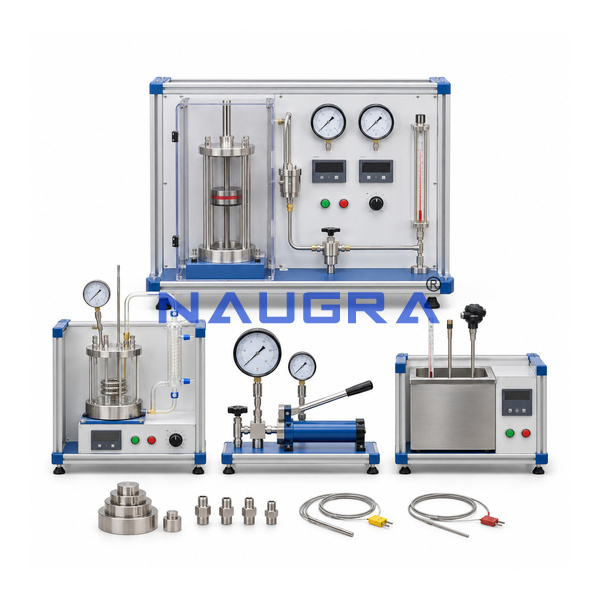
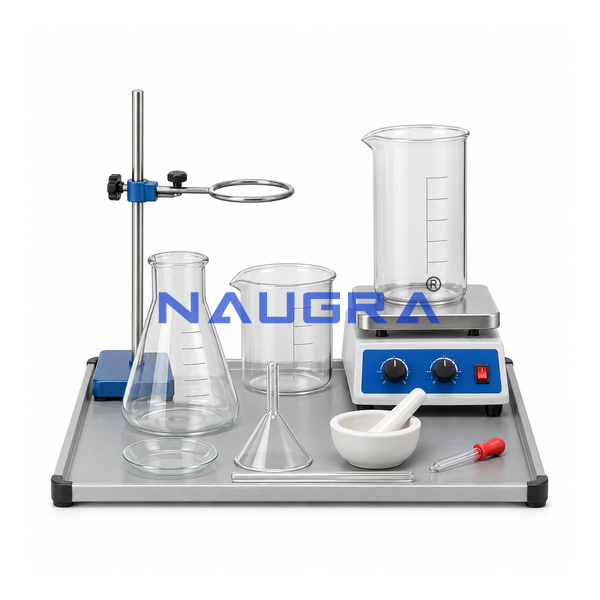
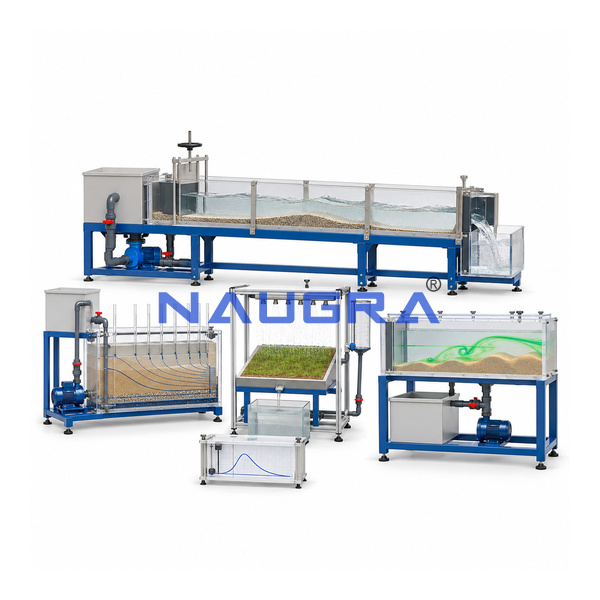
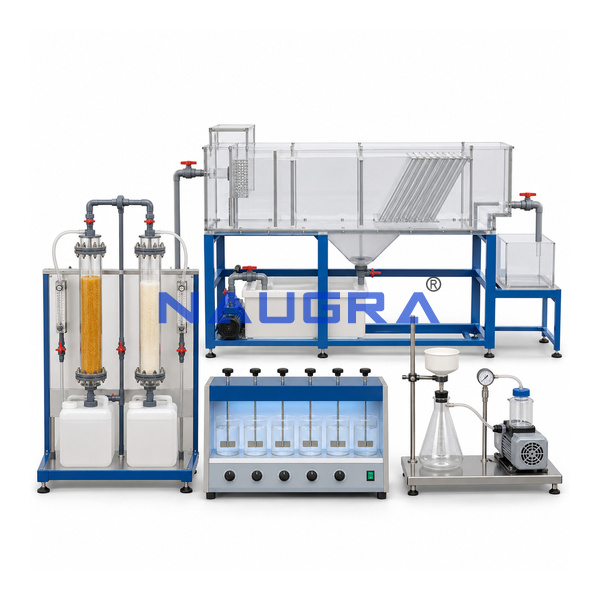
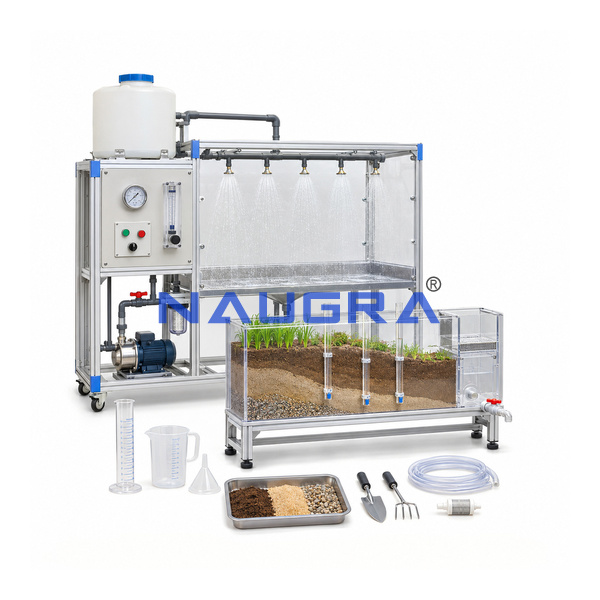
Mechanical Laboratory Instruments range by function
How is this different from civil laboratory instruments?
Civil laboratory instruments test materials, such as cement, concrete, soil and aggregate, using load frames and moulds. Mechanical laboratory instruments study machines and fluids: flow, heat, power conversion and process engineering. A polytechnic with both civil and mechanical streams buys from each range, though fluid mechanics rigs are shared by both departments.
See also: Civil Laboratory Instruments
Full Mechanical Laboratory Instruments product list
The complete Mechanical Laboratory Instruments range (216 products), in alphabetical order:
Specifications and standards
How should a mechanical department plan its lab order?
List the labs by syllabus: fluid mechanics, thermal engineering, dynamics and process engineering. Pick one service unit per lab, then add experiment modules for it. Check the utilities each rig needs, such as water, drain, compressed air and three phase power, and the floor area for flumes and wind tunnels.
What should be confirmed for flow and pump rigs?
Confirm the flow range, head, pump power and supply, the tank volume, the measuring instruments (manometers, flow meters, digital displays) and whether the sump is included. Check the material of pipework, such as acrylic or galvanised steel, and whether the unit is mounted on a trolley or bench.
When should computer controlled units be chosen?
Choose them when students need logged data and graphs, or when the department plans NBA or accreditation. They cost more and need a PC and software licence. Manual units with analogue gauges are fine for first-year teaching. Ask for software demonstrations before buying.
Who buys Mechanical Laboratory Instruments?
Engineering colleges, polytechnics, universities and technical training institutes buy from this range when starting or upgrading mechanical, chemical or civil laboratories. Government departments issue lot-based tenders that include dozens of rigs together. Research groups buy individual pilot plants, while agricultural and water resource institutes buy hydraulics and hydrology units.
Related ranges
Frequently asked questions
What is a service unit and why do many rigs need one?
A service unit supplies water, pump, tank and basic instruments, and the experiment module clips on to it. It lets the department add many experiments on one base, saving space and cost.
Can the equipment be used for NBA or ABET accreditation?
Accreditation needs lab experiments mapped to course outcomes, with documented procedures. The manuals we supply list objectives and observation tables, which help in that mapping.
How much floor area does a fluid mechanics lab need?
A typical lab with a hydraulic bench, pumps, a flume and a wind tunnel needs about 80 to 120 square metres, plus a sump and drain. Provide your room size when you enquire.
Do the heat transfer units need steam or only electricity?
Most teaching units use electric heaters and tap water, though some, such as the shell and tube exchanger, can use a steam or hot water supply. Specify what is available in your lab.
Can you supply a complete mechanical lab for an export project?
Send the bill of quantities and the destination country, and we will price the full lab together with spares, manuals and staff training arranged for overseas delivery.
Request a tender quotation
As established manufacturers and suppliers for tender requirements from India, we undertake civil laboratory and industrial testing tenders as well as bulk and OEM supply of mechanical engineering and testing laboratory equipment. Please forward your tender specifications and our team will prepare a detailed quotation for Mechanical Laboratory Instruments.
- Civil laboratory & industrial testing tenders
- Mechanical engineering & testing lab equipment
- Bulk and OEM supply