
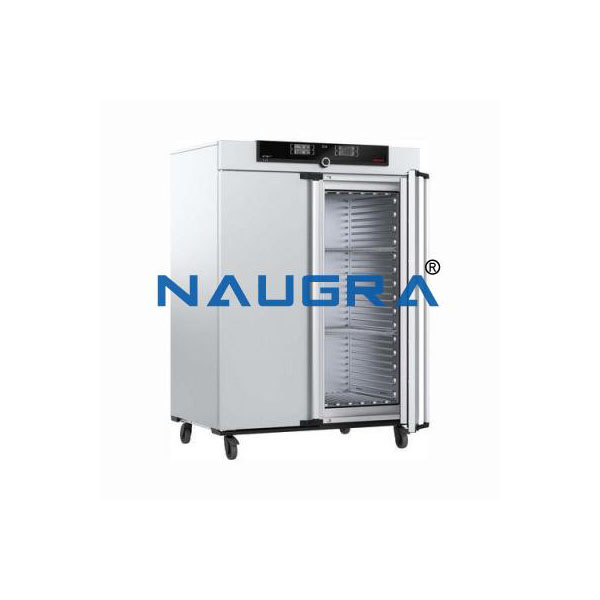
Forced Convection Laboratory Ovens
Product code: ANL-0VN-0001Buy Forced Convection Laboratory Ovens from India
Forced Convection Laboratory Ovens
Our laboratory ovens are built as double walled chambers with a stainless steel interior and a powder coated or mild steel exterior. If you are comparing laboratory ovens manufacturers in India, note that we supply plain drying ovens as well as higher temperature sterilising and programmable ovens, and we are among the suppliers in India who quote volume and shelf layout to order.
The range is grouped by how heat moves through the chamber and how the oven is controlled. Forced convection ovens use a fan for even temperature across shelves and faster recovery after the door is opened. Natural convection ovens rely on rising warm air, which is gentler and preferred when fine powders must not be disturbed. Tray drying ovens and drying cabinets add multiple trays for production style batches.
Higher temperature dry heat sterilising ovens reach 300 deg C for glassware and metal tools, and programmable models run multi-step profiles with a timer for ageing and curing studies. Ovens sit in nearly every lab for moisture content, glassware drying and sample conditioning.
Last updated: November 2026
Forced Convection Laboratory Ovens
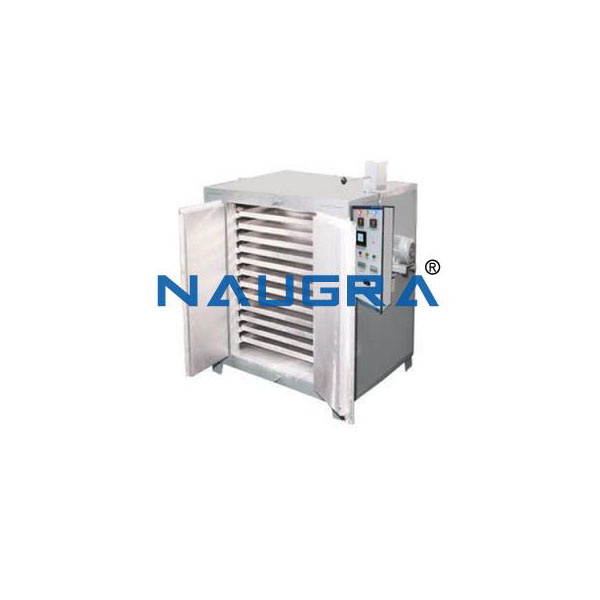
Drying Cabinet/Oven
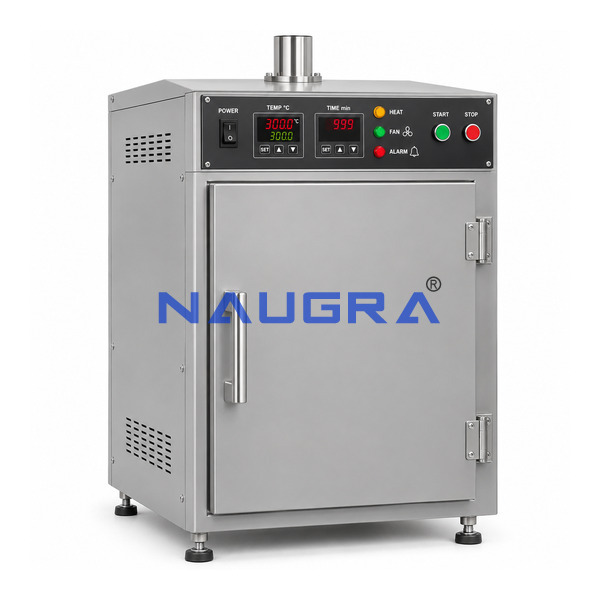
A dry heat sterilising oven reaching 300 deg C for sterilising and depyrogenating glassware, metal tools and pharmaceutical containers in clean laboratories.
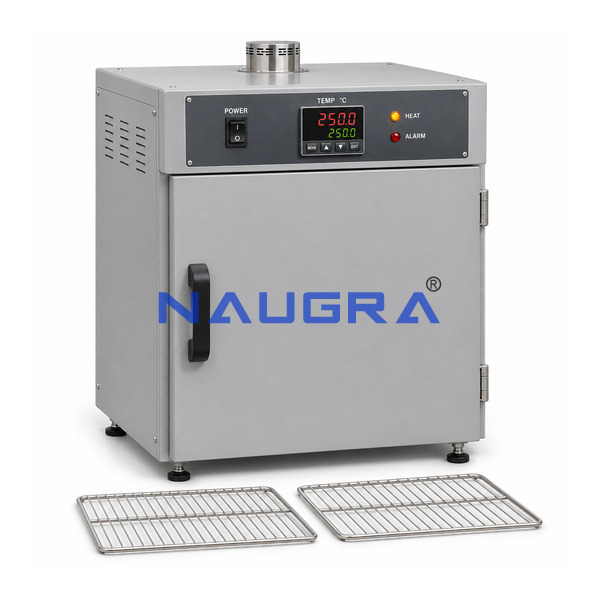
A natural convection laboratory oven with 100 litre stainless steel chamber, for gentle drying, curing and sample heating where air movement could disturb powder samples.
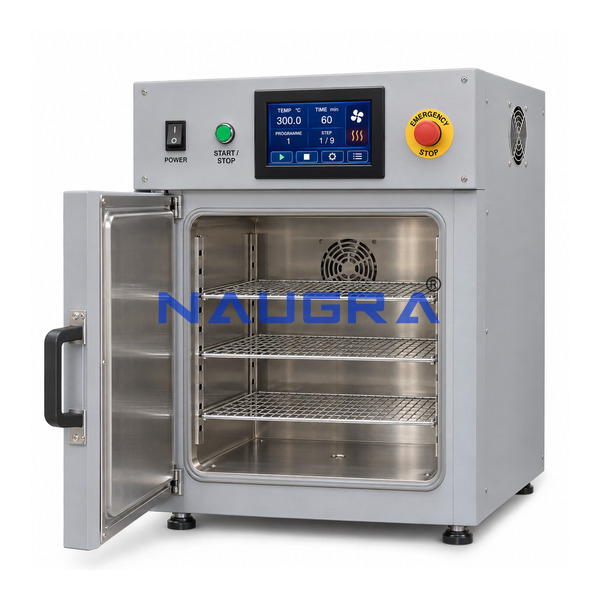
A programmable laboratory oven with multi-step temperature profile and timer, used for controlled drying, ageing and curing in research and quality testing.
| Function | Products | What to confirm |
|---|---|---|
| Forced air drying | Forced Convection Laboratory Ovens, Tray Drying Oven, Drying Cabinet/Oven | Chamber volume, number of trays, temperature uniformity, over-temperature protection and fan power. |
| Gentle natural convection | Natural Convection Laboratory Oven 100 Litre | Chamber size in litres, working range, shelf spacing and digital or analog controller. |
| Dry heat sterilisation | Dry Heat Sterilising Oven Depyrogenation | Maximum temperature, heating time, insulation, door lock and the timer or cycle recording facility. |
| Programmable processes | Programmable Laboratory Oven with Timer | Number of programme segments, ramp control, timer range and data output options. |
A laboratory oven works at atmospheric pressure and is the everyday choice for drying glassware, soil and aggregates samples and general materials. A vacuum oven needs a sealed chamber and pump and is meant for materials that oxidise or decompose in hot air. Laboratory ovens are cheaper, larger in volume for the price and easier to load. If your method names a vacuum drying step, buy the vacuum model; for moisture content and routine drying, an ordinary oven is the correct tool.
See also: Oven Vacuum
The complete Laboratory Ovens range (6 products), in alphabetical order:
| Dry Heat Sterilising Oven Depyrogenation | Drying Cabinet/Oven | Forced Convection Laboratory Ovens |
| Natural Convection Laboratory Oven 100 Litre | Programmable Laboratory Oven with Timer | Tray Drying Oven |
Confirm internal volume, number of shelves, temperature range and uniformity, and whether forced or natural convection suits your sample. Check the chamber material, over-temperature cut-off, controller type and timer. Ask for 230 V or 415 V requirement based on size, the calibration certificate and the shelf load limit. For test standards such as moisture content, check that the oven holds 105 to 110 deg C steadily.
A drying oven usually stops near 200 deg C and is not designed for sterilising cycles. A dry heat sterilising or depyrogenation oven reaches 250 to 300 deg C with proper insulation and cycle timing, which is needed to sterilise glassware and destroy endotoxins. Choose it for microbiology and pharma work and state the required temperature and hold time.
Engineering college labs use ovens for soil and aggregate moisture content, cement and concrete conditioning and material drying. Pharma and microbiology labs use sterilising ovens, while industrial QC and testing laboratories buy tray and forced air ovens for batch drying. Ovens are normally ordered along with balances, desiccators and sieves, so we quote them within complete lab packages for institutions and tender buyers.
Standard ovens run from about 5 deg C above ambient to 200 or 250 deg C, and dry heat sterilising ovens reach 300 deg C. Tell us the highest working temperature and the standard you follow so the heater and insulation are sized correctly.
Choose forced convection for uniform temperature and quick recovery with many trays. Choose natural convection for lightweight powders and delicate samples that a fan would blow around. Both can be ordered with digital controllers and timers.
Yes, we manufacture and supply laboratory ovens throughout India for tenders, institutions and export orders. Share the specification sheet and we confirm size, power and documentation requirements.
Most labs check temperature accuracy and uniformity once a year, or more often when results are used for accredited testing. We can supply a calibration certificate with the oven on request.
Small and medium ovens run on 230 V single phase. Larger chambers and high wattage drying ovens may need a 415 V three phase connection, which we confirm when we quote the chamber size.
We are leading manufacturers and suppliers for tender requirements from India, serving civil laboratory and industrial testing tenders and supplying mechanical engineering and testing laboratory equipment in bulk and on OEM terms. Send us your tender specifications, and a complete quotation for Laboratory Ovens will be prepared accordingly.
Send us your equipment list or tender specification. We quote against IS, BS, EN, ASTM and AASHTO standards and ship to 90+ countries.