
Belt and Pulley Design Bench Kit
Product code: CMI-NP-1717Buy Belt and Pulley Design Bench Kit from India
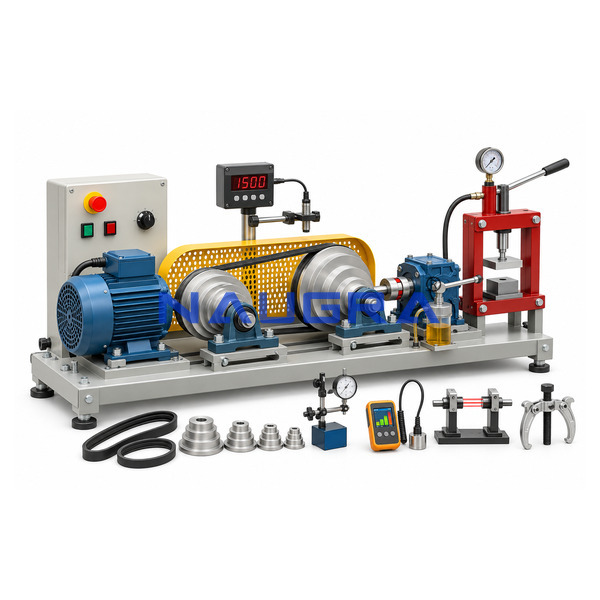
Belt and Pulley Design Bench Kit is a kit of pulleys with belts and tensioner. It is used for studying velocity ratio and belt slip.
Theory of machines practicals are easier when students can build the mechanism themselves. Mechanism motion innovation design bench manufacturers in India must supply precise, easily assembled kits, and Civil Mechanical India is among the suppliers in India of such benches for engineering colleges and polytechnics.
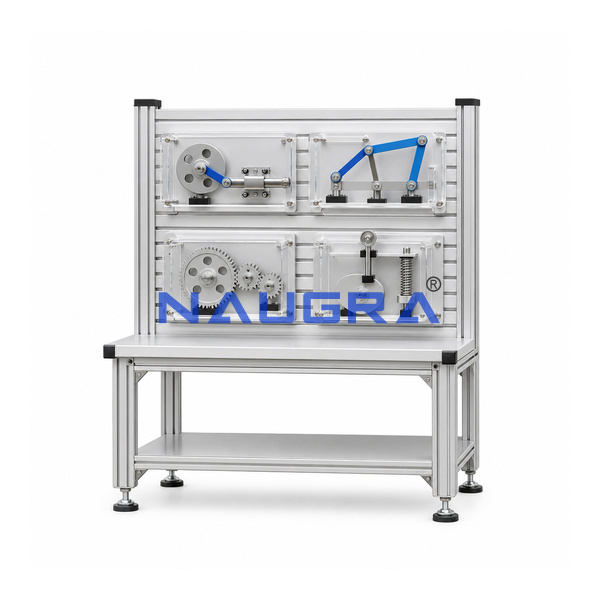
The bench has a rigid frame to which kits are fixed on one or both sides. Build-it-yourself kits such as the Four Bar Linkage Design Bench Kit, Gear Train Design Bench Kit and Cam Profile Design Bench Kit allow students to create their own arrangements, while fixed mechanisms like the Slider Crank Mechanism Design Bench and Geneva Mechanism Design Bench demonstrate classic motion conversions.
The Quick Return Mechanism Design Bench, Scotch Yoke Mechanism Design Bench, Ratchet and Pawl Mechanism Design Bench and Universal Joint Mechanism Design Bench cover the other standard syllabus topics. Together they replace scattered models with one organised lab.
Last updated: November 2026
Belt and Pulley Design Bench Kit is a kit of pulleys with belts and tensioner. It is used for studying velocity ratio and belt slip.
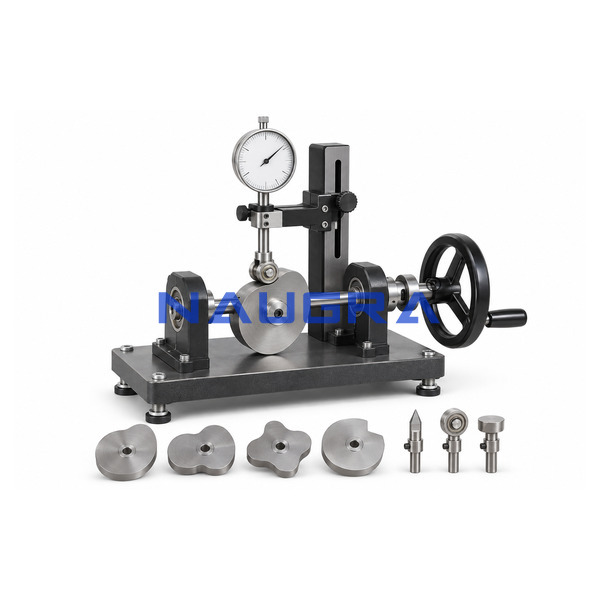
Cam Profile Design Bench Kit is a kit with interchangeable cams, followers and displacement recorder. It is used for designing cam profiles and plotting follower motion.
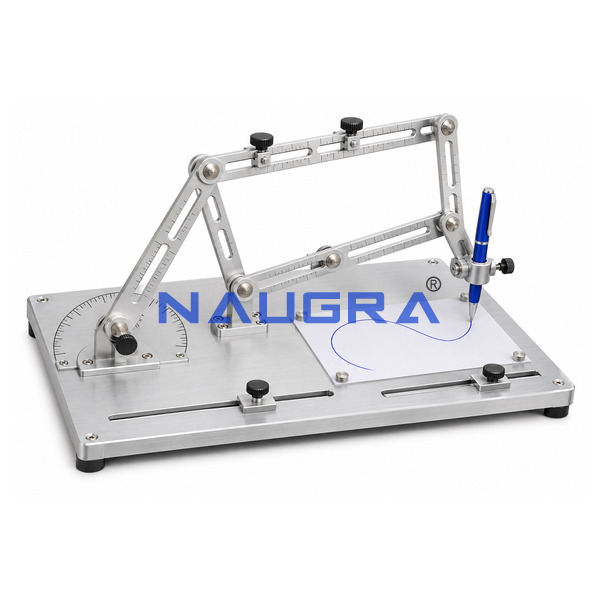
Four Bar Linkage Design Bench Kit is a kit of slotted links, pivots and a base board which builds four-bar chains. It is used for exploring Grashof conditions and coupler curves.
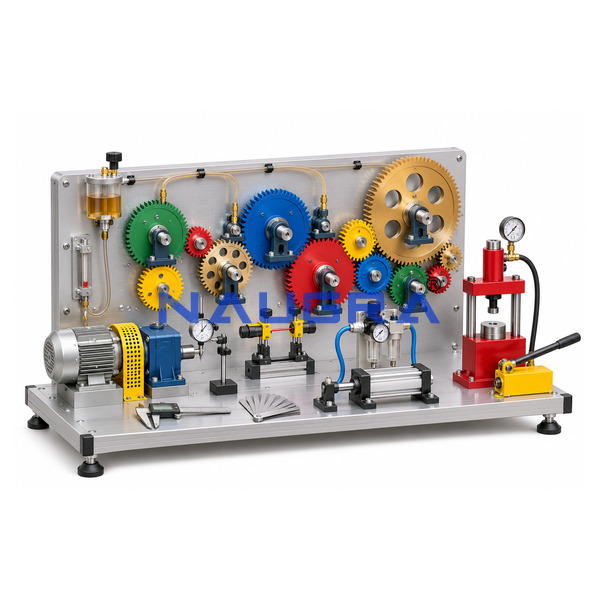
Gear Train Design Bench Kit is a kit of gears and shafts to build simple and compound trains. It is used for verifying speed ratios and gear directions.
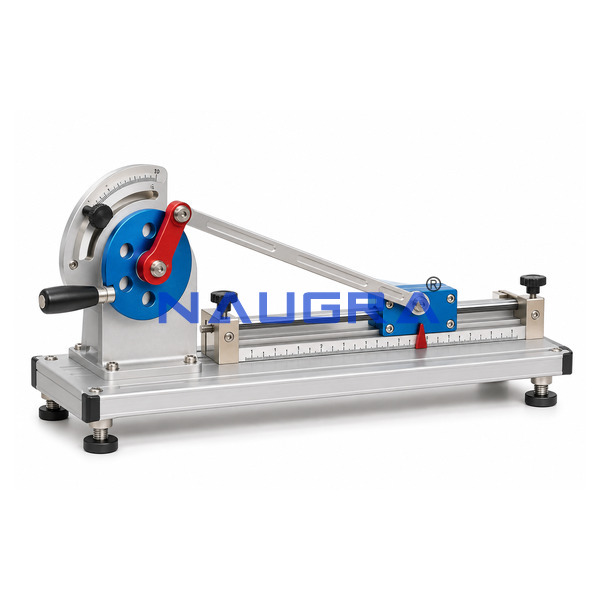
Slider Crank Mechanism Design Bench is a variable crank and connecting rod assembly. It is used for studying piston displacement and inversions.
| Function | Products | What to confirm |
|---|---|---|
| Linkage and slider mechanisms | Four Bar Linkage Design Bench Kit, Slider Crank Mechanism Design Bench, Quick Return Mechanism Design Bench, Scotch Yoke Mechanism Design Bench | Link lengths and adjustability, stroke, crank radius, pivot bearings, drive handle or motor |
| Cam, gear and belt drives | Cam Profile Design Bench Kit, Gear Train Design Bench Kit, Belt and Pulley Design Bench Kit | Number of cams and followers, gear module and tooth counts, pulley diameters, tensioner |
| Intermittent and special motion | Geneva Mechanism Design Bench, Ratchet and Pawl Mechanism Design Bench, Universal Joint Mechanism Design Bench | Number of slots or teeth, angle adjustment range, scales for reading motion |
| Bench frame and platform | Mechanism Motion Innovation Design Bench | Single-side or double-side frame, number of stations, height and mounting rails |
A mechanical comprehensive training system is about real machinery maintenance, such as dismantling gearboxes, aligning shafts and servicing pumps. The mechanism design bench is about kinematic principles shown on small demonstrators and kits, usually used in theory of machines labs. One teaches workshop skills on industrial hardware, the other teaches motion theory using adjustable mechanisms.
See also: Mechanical Comprehensive Training System
The complete Mechanism Motion Innovation Design Bench range (11 products), in alphabetical order:
Verify the link adjustment range, material (steel or aluminium) and the accuracy of angle and displacement scales. Check the frame dimensions against your lab, whether kits are driven by hand or a small motor and the availability of the lab manual with sample calculations.
Kits encourage design thinking and let a single set cover several mechanisms. Fixed demonstrators are quicker for short practicals. Most labs take a mix. Small models work best on a flat bench with good lighting, so plan about 1.2 m of table length for each student group when you lay out the lab.
Mechanical and production engineering colleges, polytechnics and design laboratories in universities buy these benches for theory of machines and machine design courses. They are typically ordered alongside gyroscope, governor and balancing apparatus. A single order can include benches, tables and manuals for each practical.
The range includes four-bar linkage, slider crank, quick return, scotch yoke, Geneva, ratchet and pawl, cam and follower, gear trains, belt drives and universal joint. Pick the ones named in your Theory of Machines practical list.
The crank radius and connecting rod length can be adjusted, so students measure stroke and slider displacement against crank angle and compare it with calculation. Ask for the angular scale resolution.
Interchangeable cams with different followers are mounted on a shaft and the follower lift is read against angle on a dial or scale. Confirm the follower types included, such as knife edge, roller and flat.
Many mechanisms are hand cranked for easy observation, and a small motor drive can be added to see motion at speed. State if a variable speed drive is required.
Wear parts such as pins, links and followers are replaceable, so a bench can keep running through many batches. Ask for a spares list with the quotation.
We are leading manufacturers and suppliers for tender requirements from India, serving civil laboratory and industrial testing tenders and supplying mechanical engineering and testing laboratory equipment in bulk and on OEM terms. Send us your tender specifications, and a complete quotation for Mechanism Motion Innovation Design Bench will be prepared accordingly.
Send us your equipment list or tender specification. We quote against IS, BS, EN, ASTM and AASHTO standards and ship to 90+ countries.