
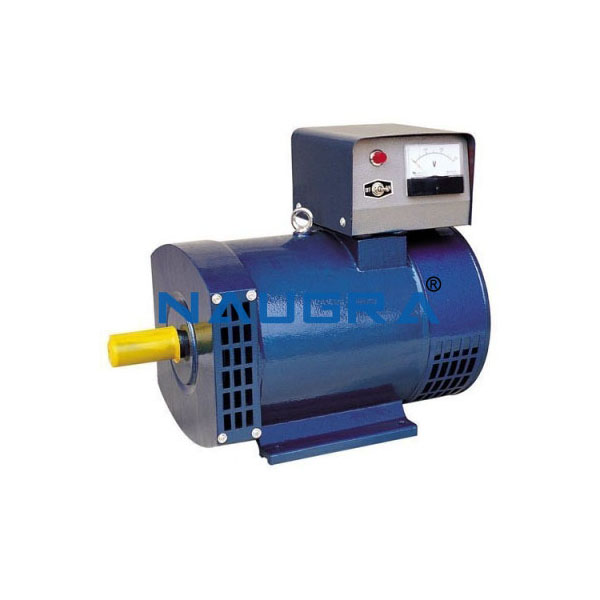
A.C Alternator And Synchronous Generator
Product code: EEG0001Buy A.C Alternator And Synchronous Generator from India
A.C Alternator And Synchronous Generator
Generator experiments need a prime mover, a field supply and a load, so the sets are built with those together. Civil Mechanical India is among the Generator Lab Equipment manufacturers in India of DC and AC generator test sets, and one of the suppliers in India who can fit a synchronising panel for alternator paralleling.
DC generator work uses a shunt or separately excited D.C. generator and a self-excited compound generator set, where a coupled motor drives a compound-wound generator to study the effect of series and shunt fields. For AC work, the A.C. alternator and synchronous generator covers regulation and characteristics, and the three phase alternator test set uses a DC motor as prime mover for open circuit and short circuit tests.
The synchronous generator parallel operation panel includes synchronising lamps and a synchroscope, so students bring a machine onto the bus. A small wind turbine generator trainer with blades and a permanent magnet generator shows power generation using a fan, giving the lab a renewable energy exercise.
Last updated: November 2026
A.C Alternator And Synchronous Generator
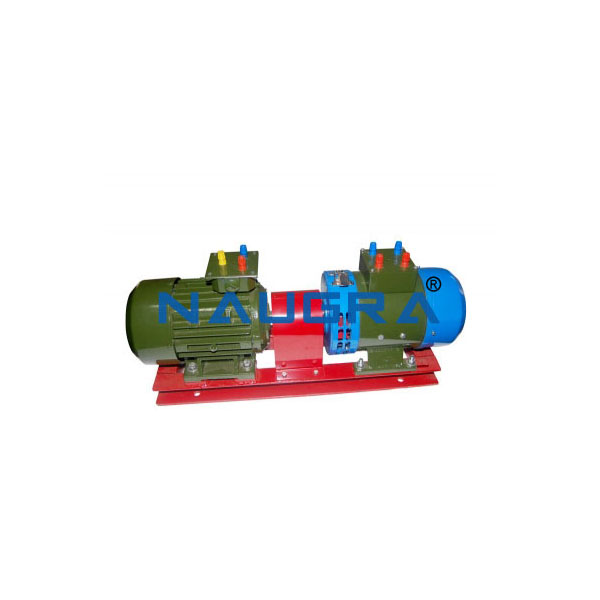
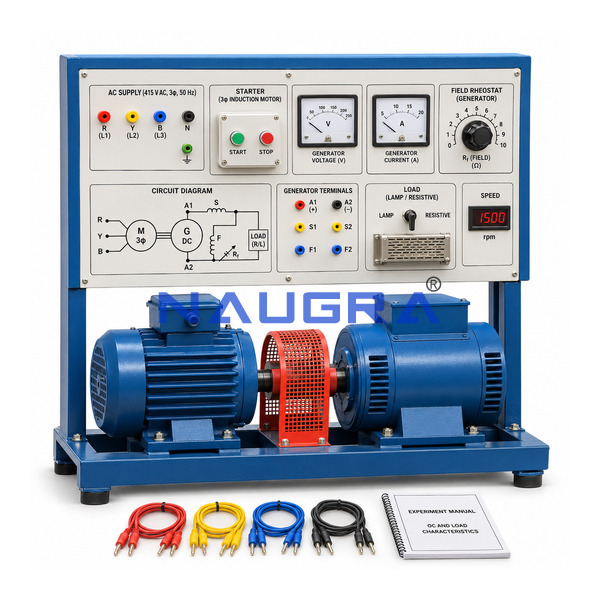
A coupled motor and compound generator set to study the characteristics of a self excited DC compound generator. Features include compound winding, prime mover and load bank.
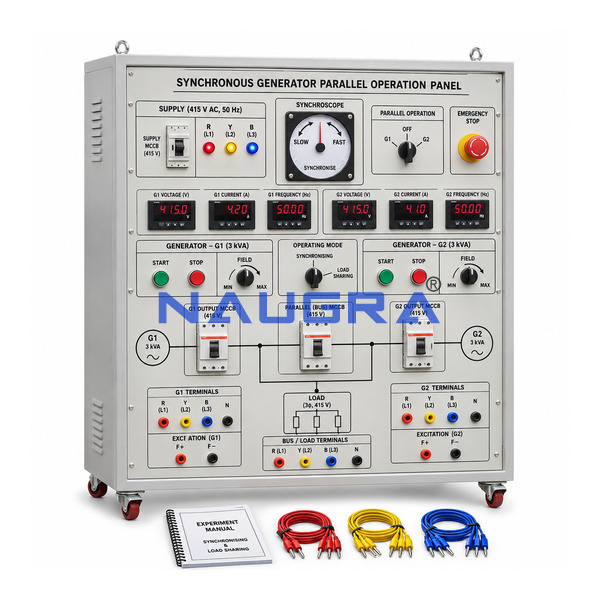
A panel for paralleling two alternators with synchronising lamps and synchroscope. Used in power system labs. Features include synchroscope, synchronising lamps and load sharing meters.
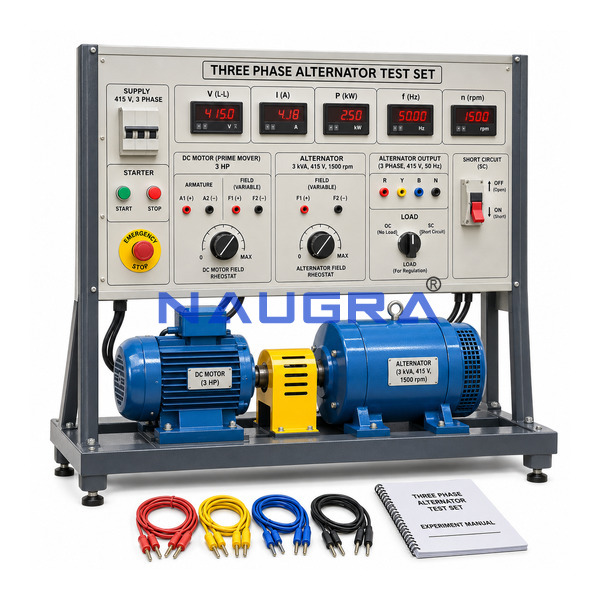
A set with a three phase alternator driven by a DC motor for studying open circuit and short circuit characteristics. Used in electrical machines labs.
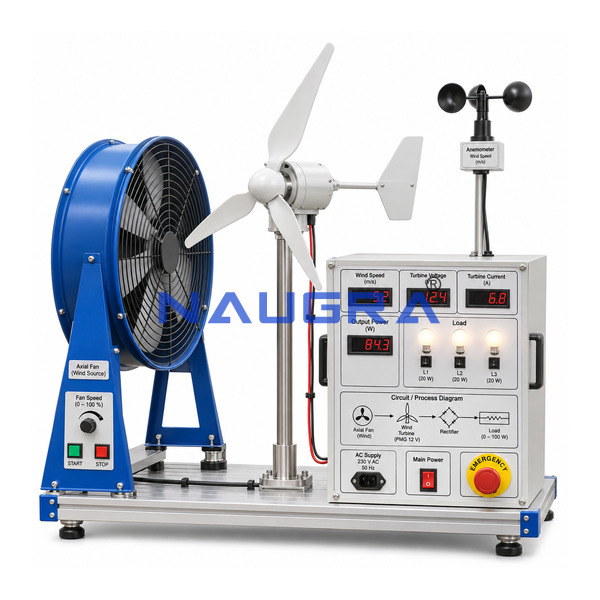
A small wind turbine and generator model showing power generation with a fan. Used in renewable energy labs. Features include turbine blades, permanent magnet generator and variable wind speed.
| Function | Products | What to confirm |
|---|---|---|
| DC generators | D.C. Generator, Self Excited DC Compound Generator Set | kW rating and voltage, excitation type, speed, coupled motor rating and meters and rheostats supplied. |
| Alternators and parallel operation | A.C Alternator And Synchronous Generator, Three Phase Alternator Test Set, Synchronous Generator Parallel Operation Panel | kVA rating, voltage, excitation arrangement, prime mover, synchroscope and lamp sets and meter class. |
| Renewable generation | Wind Turbine Generator Trainer | Rated power, rotor size, wind source needed, load and measurement units. |
Generators are the machines that produce power. Electrical loads, such as resistive, inductive and capacitive banks, are what the generator feeds during tests. A generator experiment needs both. This page covers the generator and prime mover side, while the load page provides the banks that draw current.
See also: Electric Loads Lab Equipment
The complete Generator Lab Equipment range (6 products), in alphabetical order:
Give the kW or kVA rating, voltage, speed, and whether the machine is a shunt, compound or separately excited type. Check the prime mover, such as a DC motor or an induction motor, the coupling guard and the field rheostat. A common bench uses 1 to 5 kW sets.
It includes a synchroscope, synchronising lamps (dark or bright method), voltmeters, frequency meters, circuit breakers and the means of adjusting voltage and speed of the incoming machine. Check that the panel matches the ratings and phase sequence of your alternators.
A small wind turbine trainer shows how blade speed relates to output voltage. Check the generator type (permanent magnet), the fan or wind source, instruments for voltage and current and the load resistors. It is a demonstration, not a power source, so rating is a few watts.
Electrical engineering colleges and polytechnics buy generator sets for machines labs, and the parallel operation panel for power systems practicals. Industrial training centres use alternator test sets for operators of diesel gensets. Renewable energy labs add the wind turbine generator trainer, usually with load banks and metering panels.
The open circuit characteristic plots terminal voltage against field current with no load and the short circuit characteristic plots armature current against field current, from which synchronous impedance and regulation can be found.
Match the voltage, frequency and phase sequence of the incoming alternator with the bus. The synchroscope and lamps show when the phase angles coincide, and the breaker is closed at that moment to avoid a surge.
It builds up from residual magnetism when the field circuit resistance is below the critical value, and the compound generator set adds series windings so that terminal voltage holds as load increases.
A DC motor with speed control is best because speed can be varied to adjust frequency. An induction motor gives fixed speed, which is suited to simple tests.
Specify the frequency (50 or 60 Hz) and voltage required, as these decide the alternator speed and winding, and we will quote the generator sets and panels accordingly for overseas colleges.
Civil Mechanical India is one of the leading manufacturers and suppliers in India for tender requirements, covering civil laboratory and industrial testing tenders and the bulk and OEM supply of mechanical engineering and testing laboratory equipment. Kindly share your tender specifications and we shall submit a complete quotation for Generator Lab Equipment.
Send us your equipment list or tender specification. We quote against IS, BS, EN, ASTM and AASHTO standards and ship to 90+ countries.