
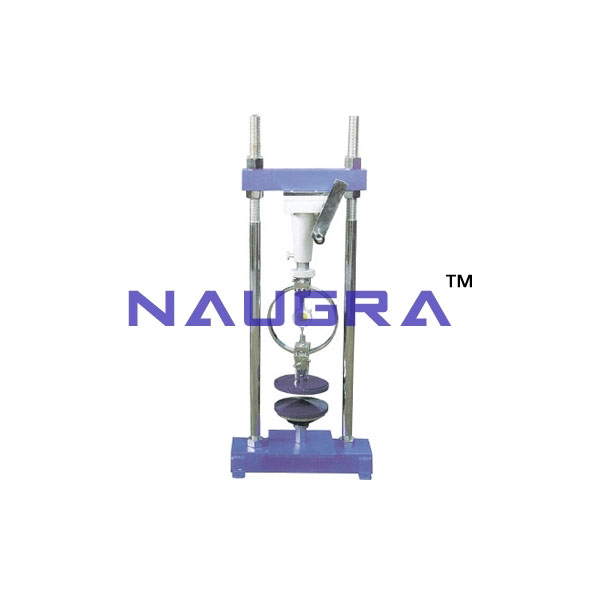
Unconfined Compression Test Machine
Product code: Compression0001Buy Unconfined Compression Test Machine from India
Unconfined Compression Test Machine
Whether a lab breaks 150 mm cubes every morning or runs a few soil triaxial tests a week, the frame and load cell decide how reliable the numbers are. Civil Mechanical India is one of the compression testing machine manufacturers in India offering channel, two-pillar and plate frames, and among the suppliers in India for soil strength testers.
Concrete compression machines in this range come in three frame types. The channel type is a compact welded frame for small labs, the two-pillar type spreads the load on columns for higher capacities, and the plate model uses a flat plate arrangement for rigid, repeatable alignment. A 500 kN hydraulic version with the jack mounted on the base suits full-size 150 mm cube work, and an electric-cum-hand operated model covers labs with unreliable power.
For soils, the unconfined compression tester applies a controlled strain rate to a cylindrical sample, and the triaxial machine (40 to 100 kN class) tests samples under confining pressure for cohesion and friction angle. Together these cover the strength tests of both a concrete lab and a geotechnical lab.
Last updated: November 2026
Unconfined Compression Test Machine
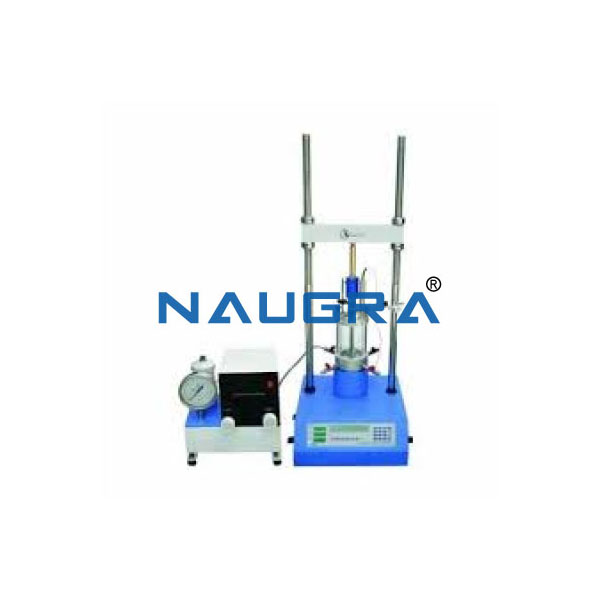
Triaxial Compression Test Machine
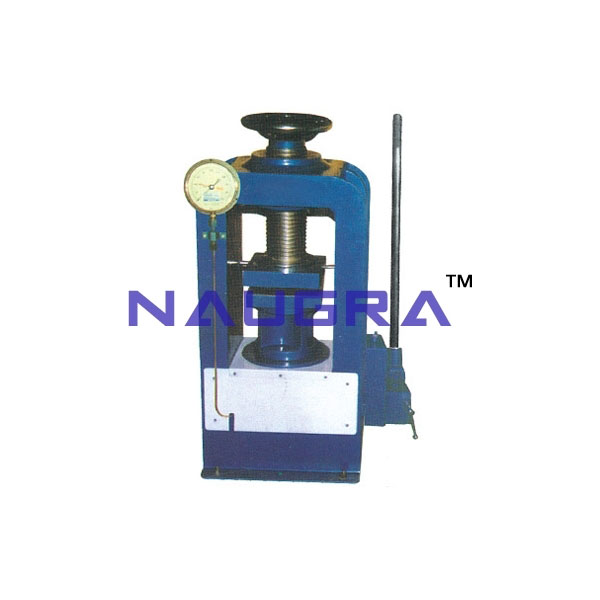
Compression Testing Machine (Channel Type)
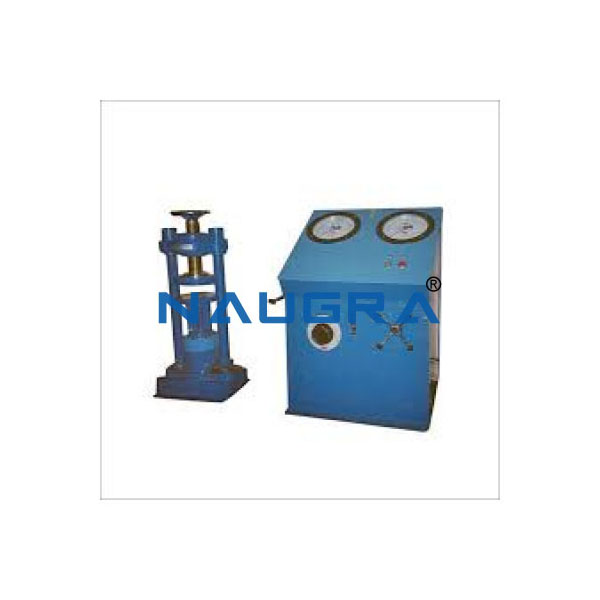
Compression Testing Machine (2 Pillars Type)
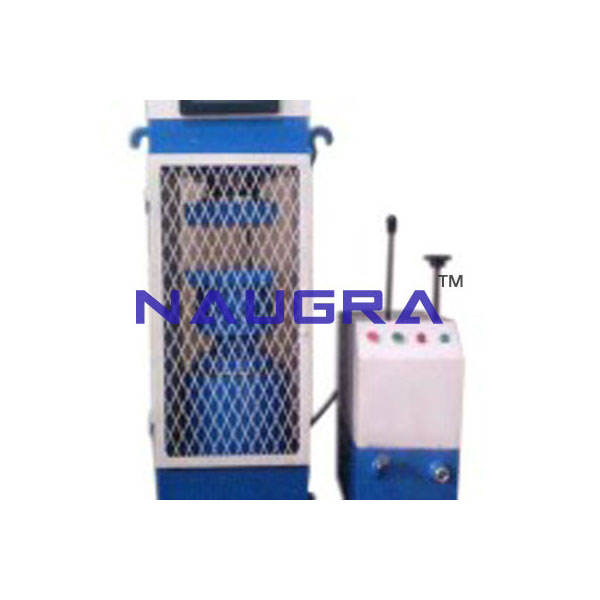
Compression Testing Machine (Plate Model)
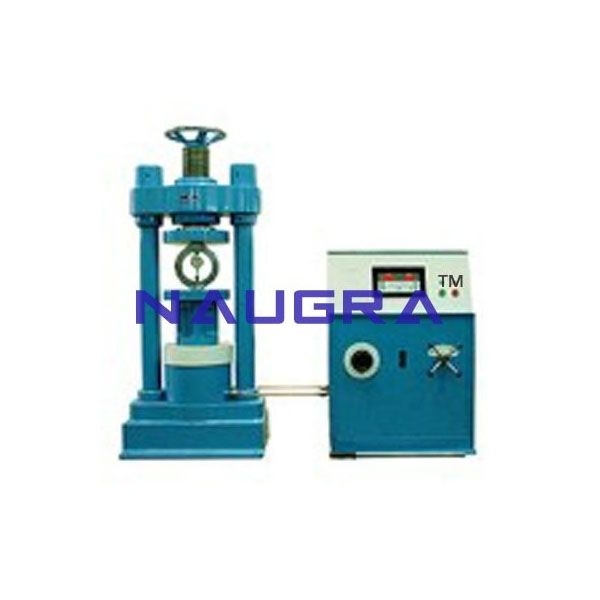
Compression Testing Machine 500 KN
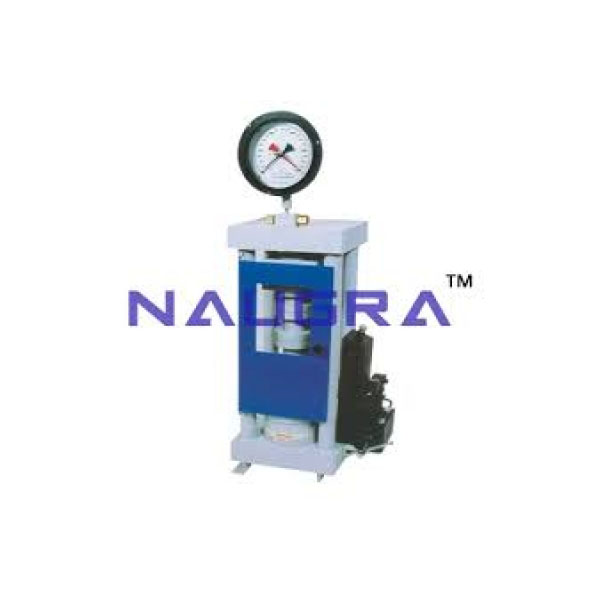
Compression Testing Machine
| Function | Products | What to confirm |
|---|---|---|
| Concrete and brick compression | Compression Testing Machine (Channel Type), Compression Testing Machine (2 Pillars Type), Compression Testing Machine (Plate Model), Compression Testing Machine 500 KN, Compression Testing Machine | Capacity in kN, platen size, daylight between platens, frame design, dial or digital readout, accuracy class and whether the pump is hand, electric or both. |
| Soil strength testing | Unconfined Compression Test Machine, Triaxial Compression Test Machine | Load capacity (for example 40 to 100 kN on triaxial), strain rate range, sample diameters, cell pressure system and whether load and deformation are read digitally. |
A compression machine only pushes: it has two platens and reads load at failure, which suits concrete, brick and soil. A universal testing machine can also pull and bend, using grips and extensometers for steel bars, wire and plastics, and its frame is built for tension. Labs breaking cubes all day choose the compression machine for cost and platen size, and add a UTM only when metals are tested.
See also: Universal Testing Machines
The complete Compression Testing Machine range (7 products), in alphabetical order:
Work back from the largest specimen. A 150 mm M60 cube can reach about 1350 kN, but M20 to M40 cubes break below 1000 kN. Most college and site labs choose 1000 kN, while 500 kN suits bricks, blocks and 100 mm cubes. Keep your highest routine load between 20 and 80 percent of capacity for accuracy, and check the platen size and daylight between platens.
Digital readouts with peak hold remove reading error and are easier to certify, so they suit accredited labs. A dial gauge keeps cost down and is fine for teaching. Either way, ask for the calibration certificate against IS 14858 or your national requirement, and confirm the loading rate range, since concrete is normally tested at 140 kg per sq cm per minute.
Confirm the sample diameters (38 mm and 50 mm are common), the strain rate range in mm per minute, the proving ring or load cell capacity and whether a pore pressure or cell pressure panel is included. Triaxial work also needs a cell, a pressure supply and a sample extruder, so list these in the order.
Ready-mix plants, building contractors and cube testing laboratories use the concrete frames daily, often one per site lab. Polytechnics and engineering colleges buy a 500 kN or 1000 kN unit for the concrete technology practical. Geotechnical consultancies and soil mechanics departments order the unconfined and triaxial machines, usually together with consolidation and shear apparatus from the soil testing range.
Concrete cubes fail suddenly and can throw fragments. A mesh or acrylic guard around the platens protects the operator and is expected in most accredited labs, so ask for it to be included.
Yes, with the right platens or capping plates. Cylinders of 150 x 300 mm need more daylight than cubes, so check the opening height of the frame and the platen diameter before choosing a model.
Usually once a year, or after any repair or move, using a proving ring or load cell traceable to a national standard. Accredited labs may calibrate more often, and the machine should come with an initial certificate.
Unconfined testing gives only the strength of a cohesive sample with no confinement. Triaxial testing applies cell pressure, so you can find cohesion and the angle of internal friction and run drained or undrained cases.
State the capacity, voltage and frequency of the destination and we will quote with the right motor and electrical fittings, packed for sea freight.
We are leading manufacturers and suppliers for tender requirements from India, serving civil laboratory and industrial testing tenders and supplying mechanical engineering and testing laboratory equipment in bulk and on OEM terms. Send us your tender specifications, and a complete quotation for Compression Testing Machine will be prepared accordingly.
Send us your equipment list or tender specification. We quote against IS, BS, EN, ASTM and AASHTO standards and ship to 90+ countries.